

- Home
- To discover
- Fine lavender or lavandin?

Fine lavender or lavandin?
Two Provençal lavenders, one endemic and wild, the other hybrid and present all over the world... But which lavender do we all have in our garden?
Fine lavender (Lavandula angustifolia) and lavandin or "hybrid lavender" (Lavandula hybrida, x intermedia) are two species of plants belonging to the Lamiaceae family, known for their pleasant fragrance and their many uses in aromatherapy, cosmetics, and perfumery. Here are the main differences between these two lavender varieties:
Origin and habitat of the different lavenders:
-
- Fine lavender: Fine lavender, also called "True Lavender" or "Officinal Lavender", originates from the mountainous regions around the Mediterranean basin, mainly in Provence, an endemic region where it reproduces naturally by seeds. It is then called "population lavender".
-
- Lavandin or "hybrid lavender": Lavandin or "hybrid lavender" is actually a natural hybrid resulting from the cross between fine lavender (Lavandula angustifolia) and spike lavender (Lavandula latifolia). It is mainly cultivated in France, notably in Provence and in the Drôme.
Appearance and growth of lavender and lavandin or "hybrid lavender":
-
-
- Fine lavender: Fine lavender plants are generally smaller, measuring between 30 and 60 centimeters in height. The leaves are narrow and gray, and the flowers are pale blue to violet in color.
- Lavandin or "hybrid lavender": Lavandin or "hybrid lavender" plants are larger, generally reaching between 60 and 90 centimeters in height. The leaves are wider and greener than those of fine lavender, and the flowers are dark violet in color.
-
Chemical composition:
- Fine lavender: Fine lavender contains a higher quantity of esters, particularly linalyl acetate, and it also contains lavandulol. It is known for its gentleness and can be applied pure to the skin. It is effective in treating skin problems, it is disinfectant and relaxing. Fine lavender essential oil is used for care and for high-end perfumery.
-
- Lavandin or "hybrid lavender": Lavandin or "hybrid lavender" has a slightly different chemical composition, with a higher quantity of camphor and cineole. Its fragrance is more intense and less soft than that of fine lavender. Its essential oil should never be applied pure to the skin. It can be used to benefit from the decongestant properties of camphor.
Uses of fine lavender and lavandin or "hybrid lavender" essential oils:
Fine lavender: It is generally preferred in aromatherapy for its soothing, anti-stress, and healing properties. It is also used in perfumery for its delicate floral notes.
Lavandin or "hybrid lavender": Lavandin or "hybrid lavender" is more commonly used for the production of essential oil for industrial purposes, due to its higher essential oil yield. It is often used for its properties to fragrance household products.
It is important to note that these two types of lavender have different uses depending on their chemical properties and their distinct fragrance. The choice between fine lavender and lavandin or "hybrid lavender" will depend on the use you want to make of it and your personal preferences in terms of fragrance and therapeutic effectiveness.
What to expect from the botanical introduction at the entrance of the Lavender Museum in Luberon, in Vaucluse?
Each visitor is warmly welcomed for a botanical introduction in front of a regional map at the entrance of the museum.
The goal is to define what true lavender is and understand how it differs from lavandin or "hybrid lavender".
The explanation of the different lavender varieties is also an integral part of the group guided tours and educational workshops such as the lavender sachet workshop and distillation.
At the end of this introduction, you will know:
- How these varieties reproduce (seeds, cuttings, genetic selection, or population plant)
- You will know their preferred terroirs (from its endemic dry mountains in Provence to the Bulgarian plains, passing through the Valensole plateau...)
- You will be able to explain what a population lavender, a clonal lavender, and a hybrid lavender are (fine lavender, true lavender, officinal lavender, lavandin or "hybrid lavender", clonal lavender, spike lavender, butterfly lavender...)
- You will know when and why fine lavender and lavandin or "hybrid lavender" fields were planted in the region (history of the perfumers of Grasse and their essence brokers).
- The benefits and uses of fine lavender essential oil will no longer hold any secrets for you, with an olfactory discovery in the shop of the Lavender Museum.
We can’t wait to welcome you to the museum!! :)
The same natural method: steam distillation
Steam distillation, also known as steam stripping, is a traditional method for extracting essential oils. Steam passes through the plant material placed in a still, carries the aromatic molecules, then condenses in a cooled coil. The resulting mixture naturally separates in a Florentine flask: the essential oil rises to the surface, while the floral water (hydrosol) remains below.
This process, used for both true lavender and hybrid lavender, requires no chemical solvents. It produces pure extracts used in aromatherapy, natural cosmetics, and perfumery. However, even though the principle is the same, the distillation techniques and yields differ greatly between fine lavender and hybrid lavender.
Fine lavender: a gentle distillation to preserve all active compounds
Fine lavender, cultivated at higher altitudes in the Luberon and Vaucluse, is distilled using a very precise artisanal method. Since fine lavender is used in aromatherapy, the distillation technique is adapted to preserve as much as possible the flower’s active compounds in the essential oil.
The flowers are first pre-wilted in open air for one to three days. This pre-wilting naturally reduces the plant’s moisture content, helps maintain low pressure during distillation, and prevents hydrolysis, which could alter aromatic molecules. Pre-wilting is also essential for obtaining an essence with a refined, light, and elegant fragrance.
Distillation is then carried out at low pressure and with controlled temperature (below 100°C). This process extracts the essential oil while respecting the natural molecular richness of fine lavender.
Yields remain very low: it takes about 130 kg of flowers to produce 1 litre of essential oil. Because of this rarity and long crop rotations, producers seeking premium quality generally use smaller, more precise stills than those used for hybrid lavender. This precision allows better control of extraction and superior aromatic quality.
Hybrid lavender: the “green crushed” technique for large-scale production
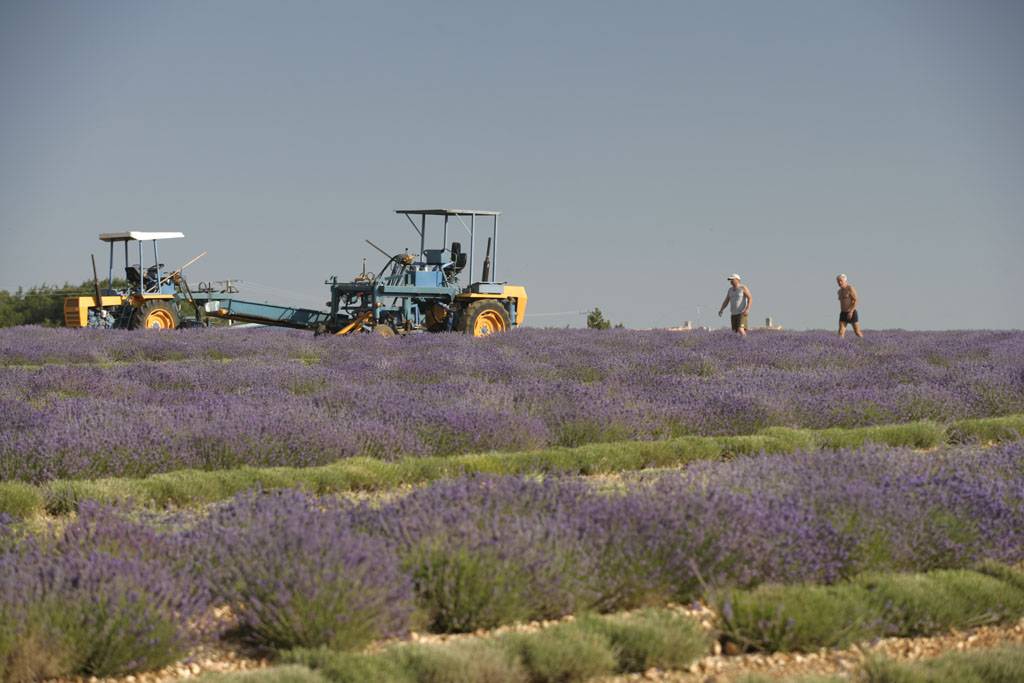
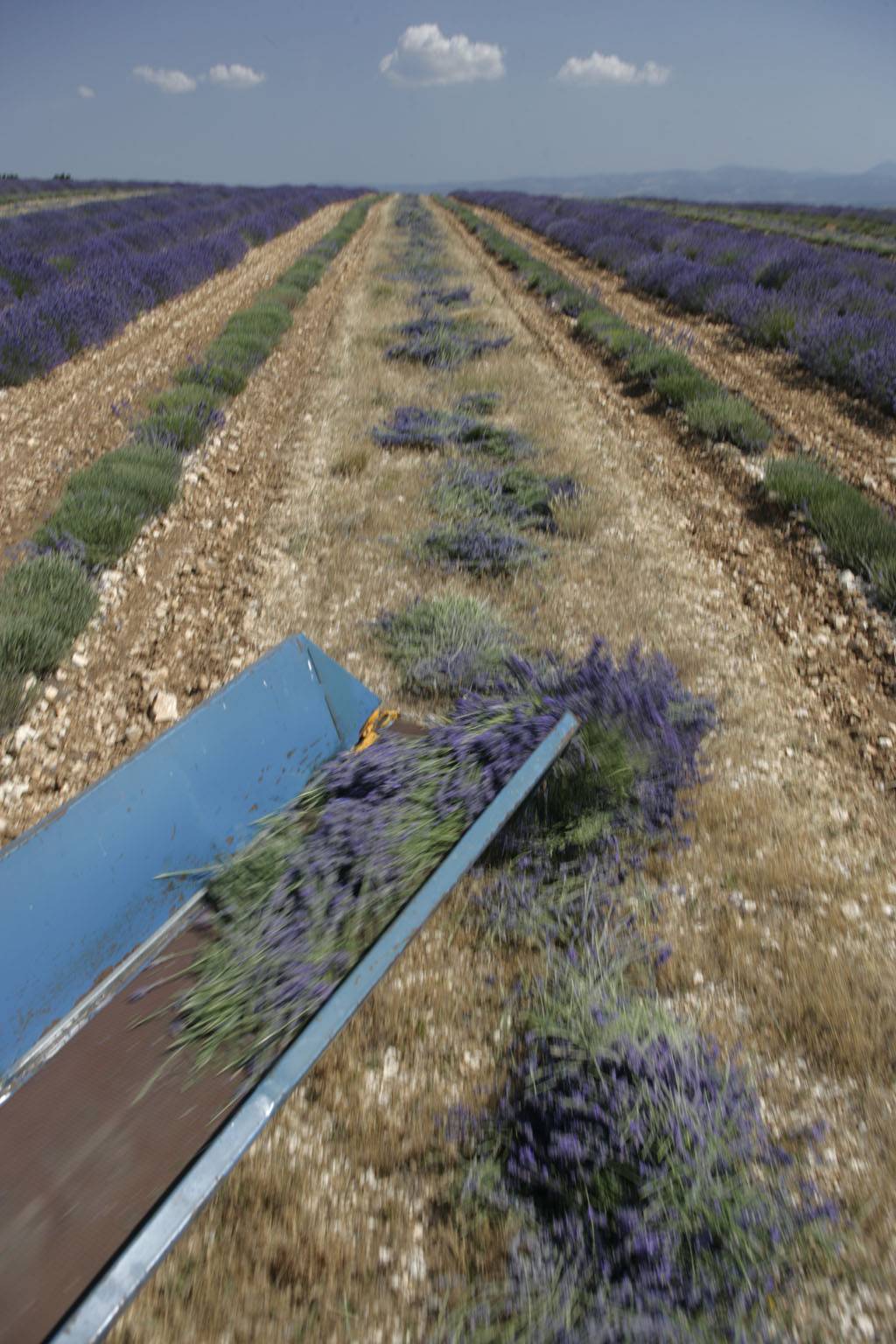
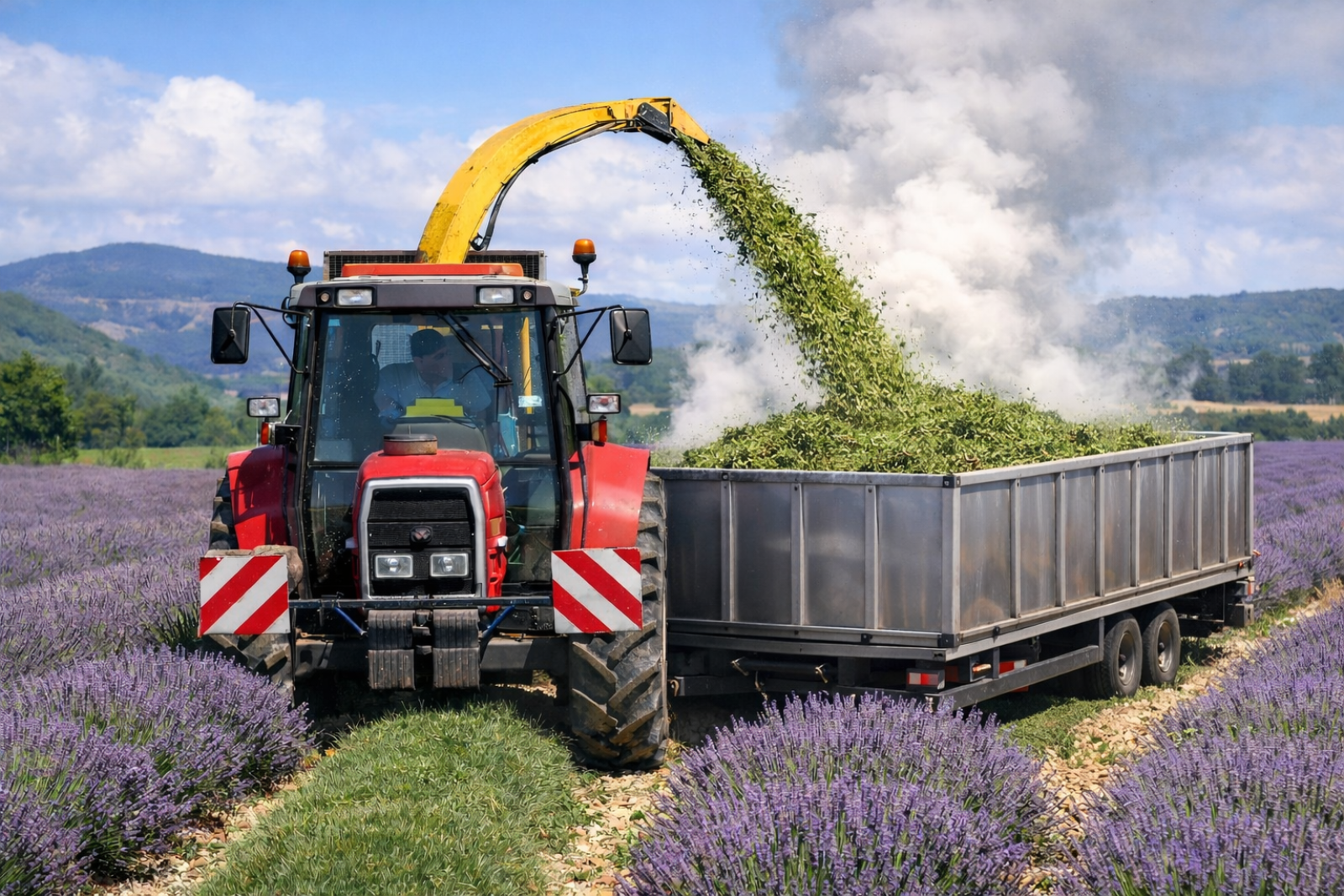
Hybrid lavender, a highly productive natural hybrid, is often distilled using a more mechanized method known as the “green crushed” technique. In this process, flowering stems are harvested mechanically, then crushed directly in the field. The plant material is then loaded into large metal containers that serve as mobile autoclaves.
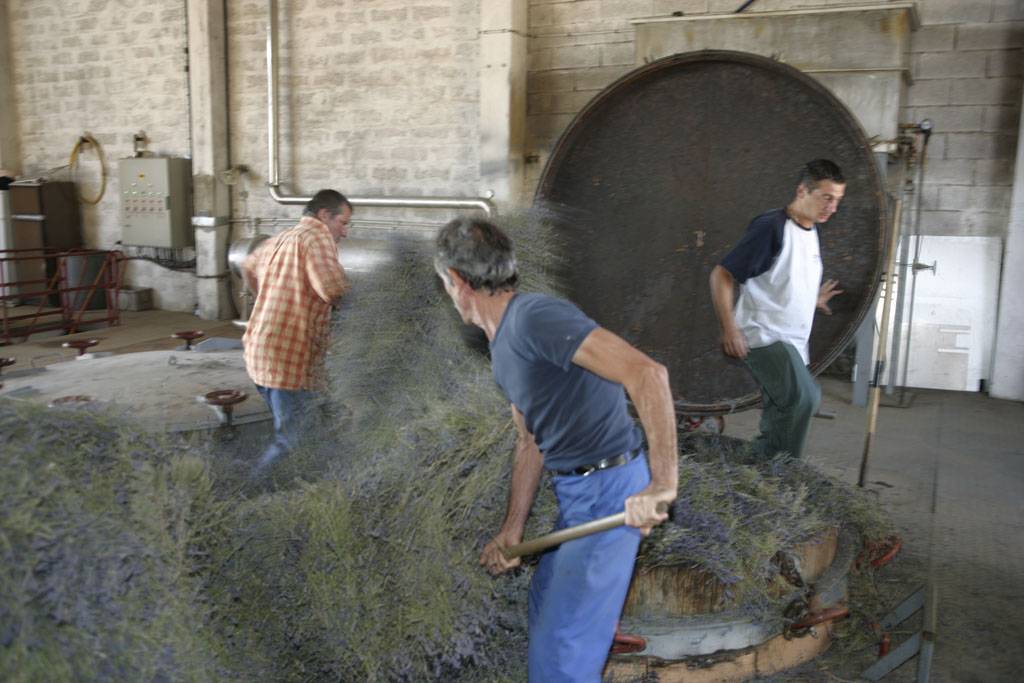
These containers are transported to the distillery, where the plant is distilled in large quantities, often under higher pressures, with less control over humidity or compaction of the plant material. This method makes it possible to process very large volumes of flowers quickly.
Hybrid lavender has a high yield: it takes about 40 to 50 kg of flowers to produce 1 litre of essential oil, meaning about 4 to 5 times less plant material than for fine lavender. The essential oil obtained is more camphoraceous, more uniform, and mainly used in household products, industrial cosmetics, or functional perfumery.
Two complementary distillation approaches
Fine lavender distillation relies on precision, gentle extraction, and the pursuit of maximum aromatic quality. Hybrid lavender distillation prioritizes speed, volume, and production efficiency. Both methods have their place and meet different needs.
Understanding these differences helps you choose an essential oil according to its intended use: aromatherapy, wellness, cosmetics, or domestic use. It is also a way to better appreciate the richness of Provence’s lavender-growing heritage.
Author: Max Lincelé
Last updated : 11/02/26